Level Nine Raises €4M to Unlock Locally Abundant Feedstocks for Europe's Chemical Industry
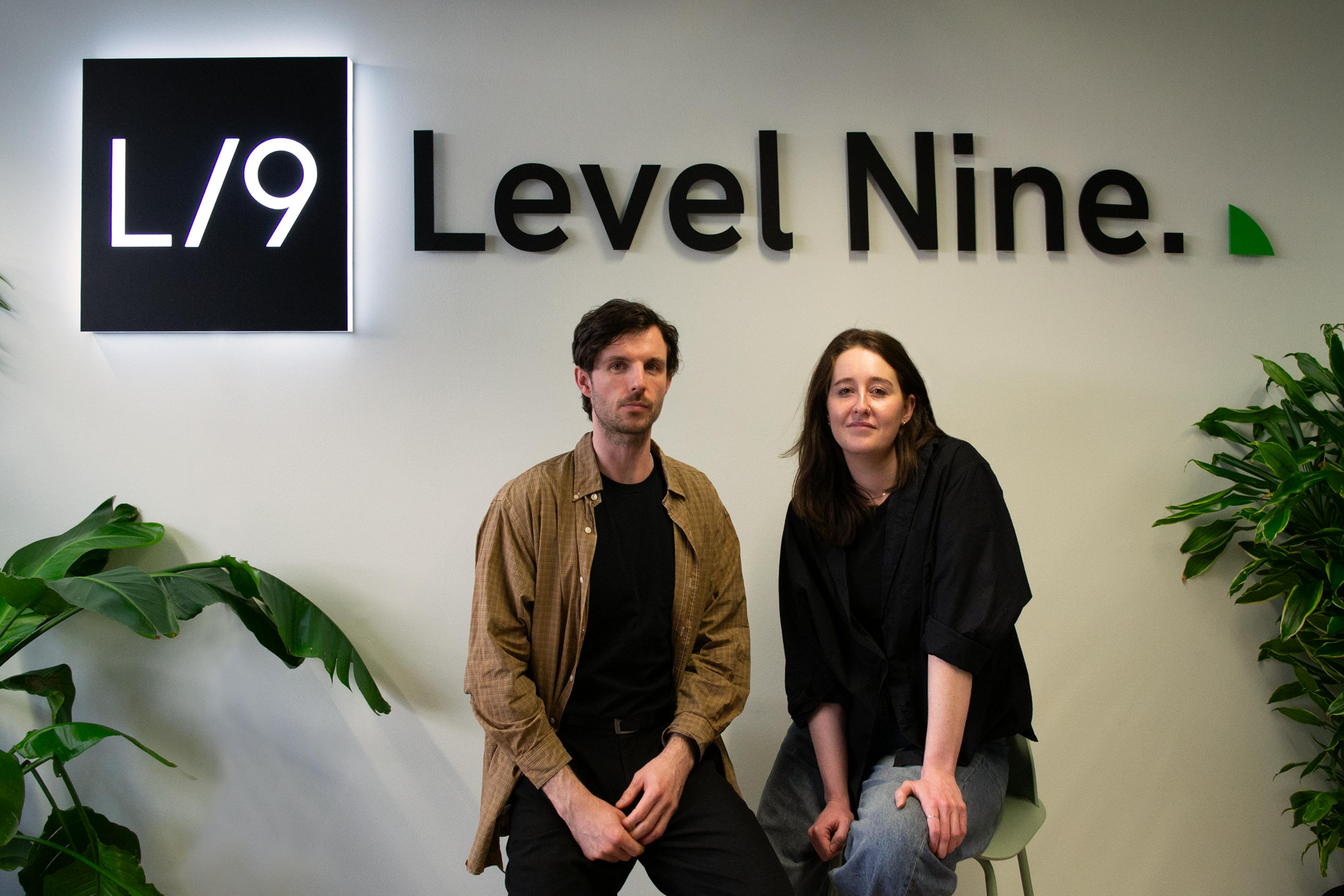
Berlin, March 17, 2026 — At a time when Europe’s chemical industry is facing plant closures, volatile feedstock prices, and intensifying global competition, Berlin-based Level Nine has raised €4M in Seed funding to unlock locally abundant non-fossil feedstocks for the production of industrial chemicals. The company develops AI-designed catalysts that convert biomass into high-performance chemical intermediates, reducing the industry’s dependency on volatile international markets.
The round was led by Visionaries Tomorrow, with participation from Zero Carbon Capital, Rockstart, IBB Ventures, and better ventures. The company has now raised a total of €6.5M in funding, including equity and grants. The new capital will accelerate the industrial scale-up of Level Nine’s AI-driven catalyst discovery platform. Level Nine’s next-generation industrial catalysts are designed to convert locally available bio-based feedstocks into chemical building blocks that outperform petrochemicals on both cost and performance.
Europe’s Chemical Industry Is at an Inflection Point
Europe’s chemical sector, a €1 trillion backbone industry, is under structural pressure. Volatile fossil feedstock prices, sustained high energy costs, geopolitical disruptions, and aggressive capacity expansion in China and the Middle East have eroded margins and forced production slowdowns and shutdowns across the continent. For decades, biomass has been seen as a potential alternative to fossil feedstocks. But existing catalytic technologies cannot convert these complex molecules cost-effectively at industrial scale. Traditional catalysts lack the precision to process complex bio-based molecules efficiently. Natural enzymes offer selectivity, but they are too fragile and expensive for industrial chemical processes. This technological gap has effectively locked the industry into a dependency on fossil-based feedstocks. Not by choice, but by chemistry.
Engineering the Missing Catalytic Layer
Level Nine has developed a new class of industrial catalysts aimed at solving this critical bottleneck. The company designs catalysts that have the precision of enzymes but with greater robustness to harsh temperatures, pressures, and industrial solvents.
“Nature has already solved many of chemistry’s hardest problems. We take that precision and engineer it for the realities of heavy industry. Leveraging AI, we can design entirely new industrial catalysts in a fraction of the time traditional methods would take.”, says Emily Sheridan, Co-Founder & CTO of Level Nine.
The result: high-yield conversion of complex bio-based feedstocks into drop-in chemical intermediates under milder conditions and with significantly reduced energy requirements by up to 90%. In practice, this enables the production of drop-in chemical intermediates from biomass using existing industrial infrastructure.
“For years, the chemical industry has known that biomass could replace fossil feedstocks. What was missing was catalytic precision to make that economically competitive at industrial scale. We don’t ask manufacturers to compromise on cost or performance – we develop the chemistry that makes the transition economically viable,” says Seadna Quigley, Co-Founder and CEO of Level Nine.
At its core is a machine-learning-driven catalyst development platform that dramatically accelerates catalyst discovery. Level Nine’s AI-driven platform reduces catalyst development timelines from years to months, enabling faster industrial validation across multiple product lines.
First Market: The €100B Polyurethane Industry
Level Nine’s initial focus is the global polyurethane (PU) market, valued at over €100B annually and used in automotive, construction, insulation, furniture, and consumer goods. The company designed a catalyst that efficiently produces drop-in aromatic bio-polyols from biomass. The bio-polyol they produce with their catalyst not only matches fossil-based performance at the same cost, but also offers intrinsic flame retardancy that eliminates the need for toxic and expensive additives, and integrates seamlessly into existing PU manufacturing infrastructure.
Level Nine is currently collaborating with leading polyurethane manufacturers and feedstock suppliers and is progressing toward construction readiness for its first kiloton-scale production plant in 2027. The company is already working with industrial partners across the polyurethane value chain.
Built by Founders Who Saw the Gap Firsthand
Level Nine was founded by CEO Seadna Quigley and CTO Dr. Emily Sheridan, after they had seen first-hand how promising bio-based processes repeatedly failed to scale due to catalytic limitations. Seadna is a repeat founder with 10+ years experience in the bio-industrial transition. Before starting Level Nine, he was the CFO of a circular bio-economy startup in Amsterdam. Emily is an interdisciplinary scientist specialised in bio-inspired materials and reaction engineering. Her research focus has been on bridging the gap between biological precision and industrial robustness. With the fresh capital, Level Nine will accelerate the development of its end-to-end catalyst platform and achieve early commercialisation of its beachhead product.
“Europe’s chemical industry is facing a structural competitiveness challenge. As feedstock volatility increases and global competition intensifies, the ability to convert local inputs into high-performance chemicals becomes a strategic necessity. Catalysis determines the economics of this industry. What Level Nine has built is a foundational technology layer capable of unlocking entire value chains,” says Dr. Iris ten Have, Principal at Visionaries Tomorrow.
“We first backed Level Nine in 2023 because we could see the potential to produce cost competitive, high performance biochemicals and biomaterials. It’s extremely difficult to move away from fossil-based chemicals, but Level Nine makes this achievable with their robust, targeted catalysts. Emily and Seadna have made great strides and we are thrilled to continue with them as they scale,” says Sarah Jones, Principal at Zero Carbon.
About Level Nine
Headquartered in Berlin, Level Nine is building an ML-driven catalyst platform to radically improve the efficiency, cost, and sustainability of chemical production using locally abundant and cost-stable biobased feedstocks.
More information: www.levelninelabs.com.
About Visionaries Tomorrow
Visionaries Tomorrow is an early-stage venture capital fund backing founders building breakthrough technologies across industrial deep tech infrastructure. The fund works closely with Europe’s leading industrial families and operators, and its portfolio includes companies such as Proxima Fusion, Arago, Hades Mining, and Radical Dot.
More information: https://www.tomorrow.vc/
About IBB Ventures
IBB Ventures has been providing venture capital to innovative Berlin-based companies since 1997 and is one of the mostactive early-stage investors in Berlin. In addition to its two VC funds for technology and creative industries with a combined volume of €100 million, and the €30 million Impact VC Fund launched in 2022, the €10 million Pre-Seed Fund B# (“be sharp”) for Berlin-based deep-tech startups has been in its investment phase since 2025. The funds are financed through the European Regional Development Fund (ERDF) and Investitionsbank Berlin (IBB).
To date, IBB Ventures has invested in approximately 300 Berlin-based companies. Together with investment partners in consortia, these startups have raised more than €2 billion in total, of which IBB Ventures has contributed more than €300 million as lead, co-lead, or co-investor. IBB Ventures is the umbrella brand for the VC activities of IBB Beteiligungsgesellschaft and part of the IBB Group.
Media Contact:
Seadna Quigley (CEO, Level Nine)
seadna@levelninelabs.com
+49 1 622 830 659
Contact:
Marvin Martsch
IBB Ventures
Bundesallee 210
10719 Berlin
Tel: +49 (0)30 2125 3201
Mail: info@ibbventures.de